National Australian Bank
Redesign a fragmented home loan experience
Client:
National Australian Bank (NAB)
Role:
Senior Product Designer
Year:
2025
The cause
The problems:
6 legacy systems, 4 days to process an application end-to-end
Experience differs by channel (broker, banker, valuer, credit assessor, fullfillment, etc.)
High unit cost per application, costing market share
What had already been tried:
A new platform launched 2 years ago dropped processing time from 4 days to 1.8
But it could only accept 25% of applications — the remaining 75% fell back to legacy
We'd already solved the simple home loan cases. Now it's time to improve and scale to complex ones.
My role 💃
Lead designer across 3 end-to-end squads (apply → fulfilment):
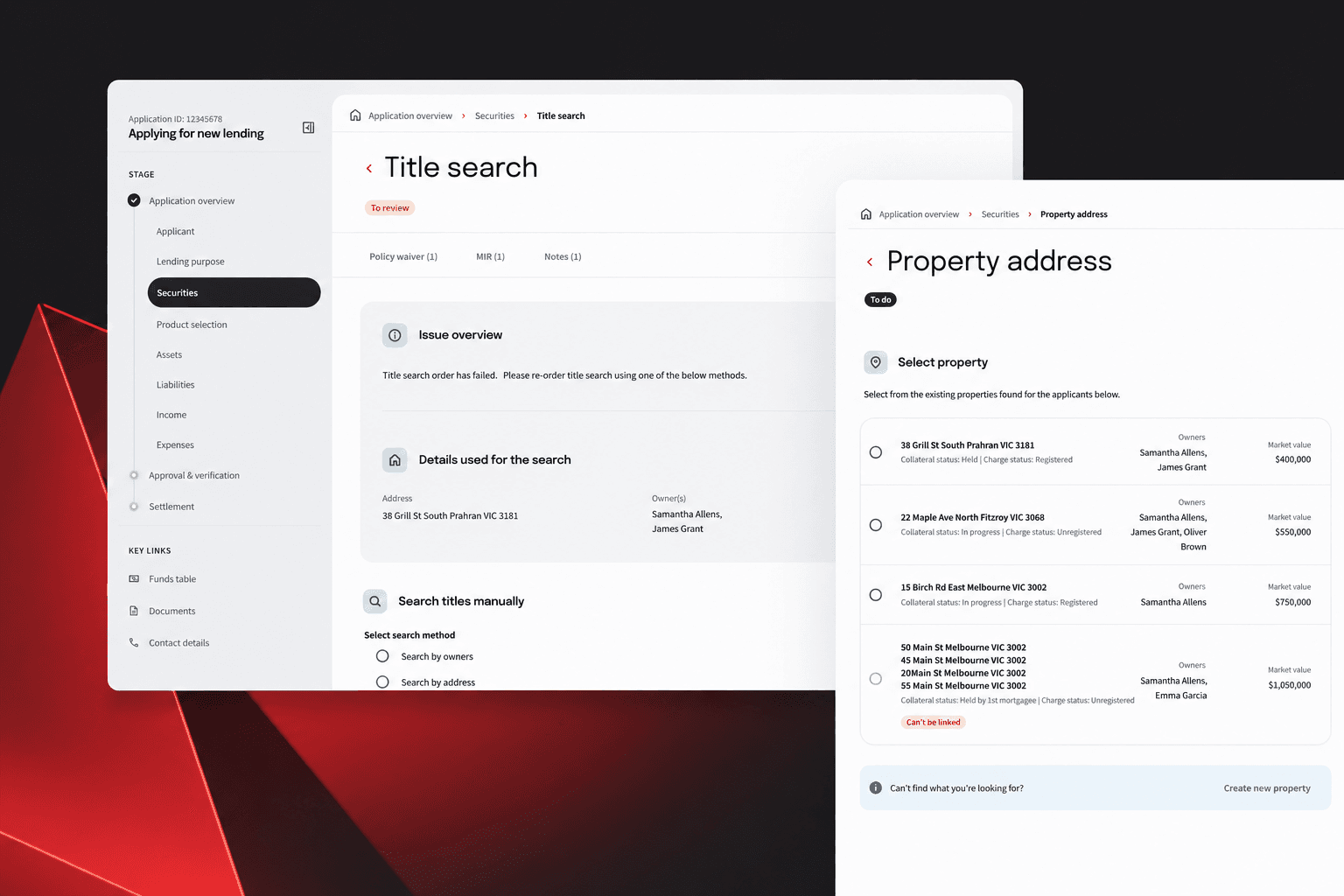
The house — property, valuation and security
The applicant — borrower identity
Credit assessment & policy waivers — risk decisioning and exceptions
The action
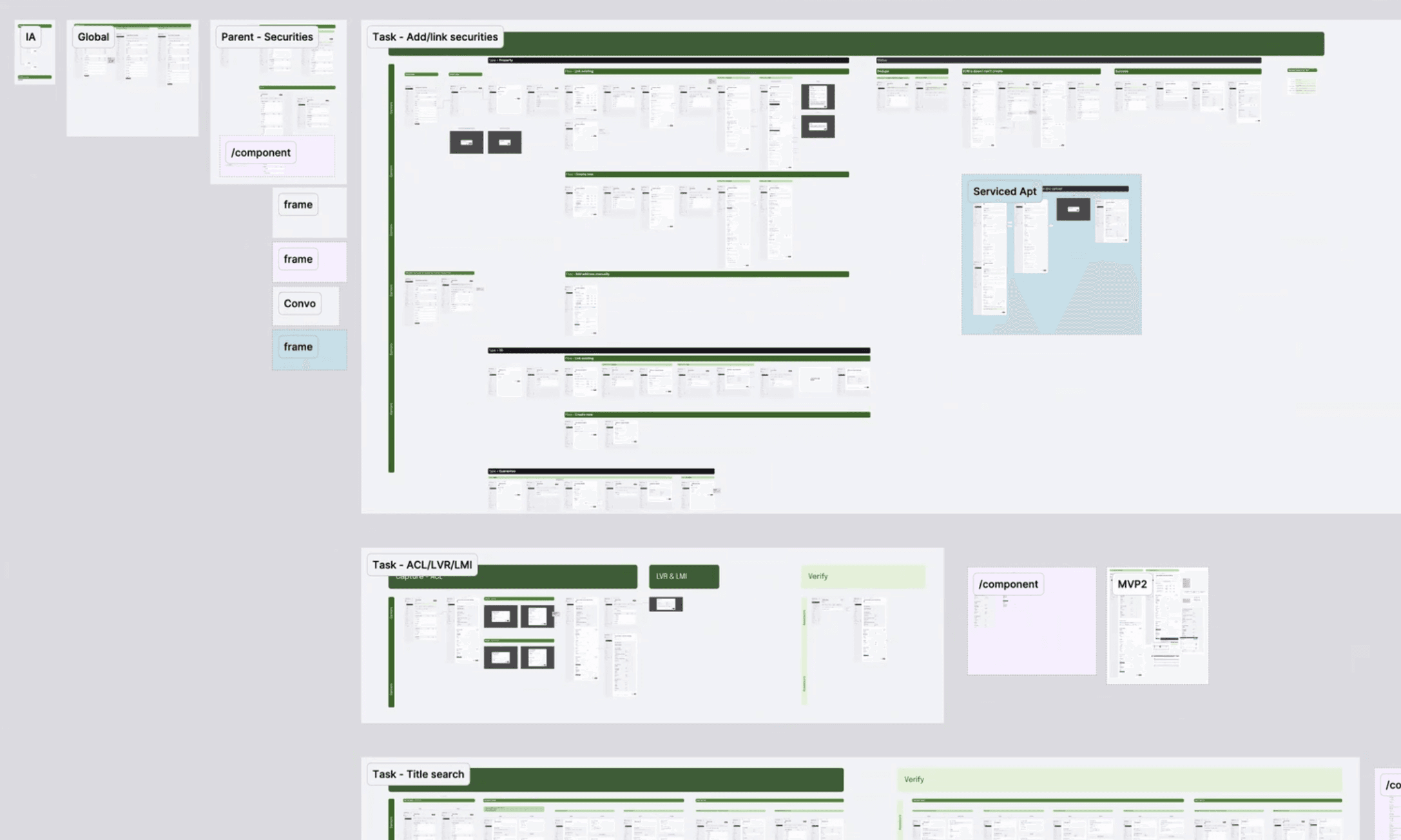
1. Design by customer scenario, not by screen
Customers don't experience product squads, they experience scenarios that touch all of them.
Squads are structured vertically by product (the house, the applicant, the income), we deliver horizontally by scenario (purchase, refinance, construction). Each squad kept its vertical depth as a product expert, design stitched the horizontal experience together. This forced us to work across the squad structure and surfaced cross-product dependencies the legacy systems had been hiding.
Example: a refinance scenario with a guarantor and self-employed income exposed that the applicant and income squads had been collecting the same data in two different formats — neither system could read the other.
2. Move design up into policy, process, and tech decisions
The biggest operating change. Design used to get requirements from business and tech later on. In 1WAY, design now sits in the room when policy, process, and architecture decisions are being made; trade-offs get debated with the customer's voice present.
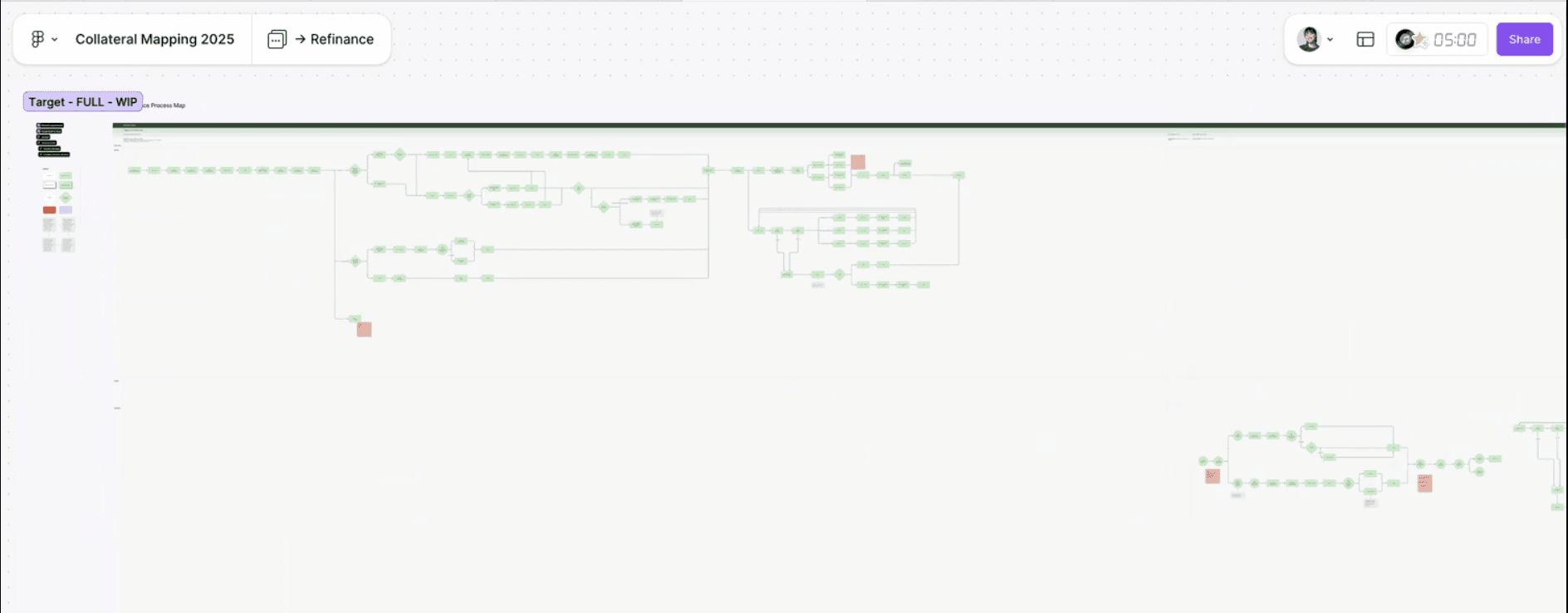
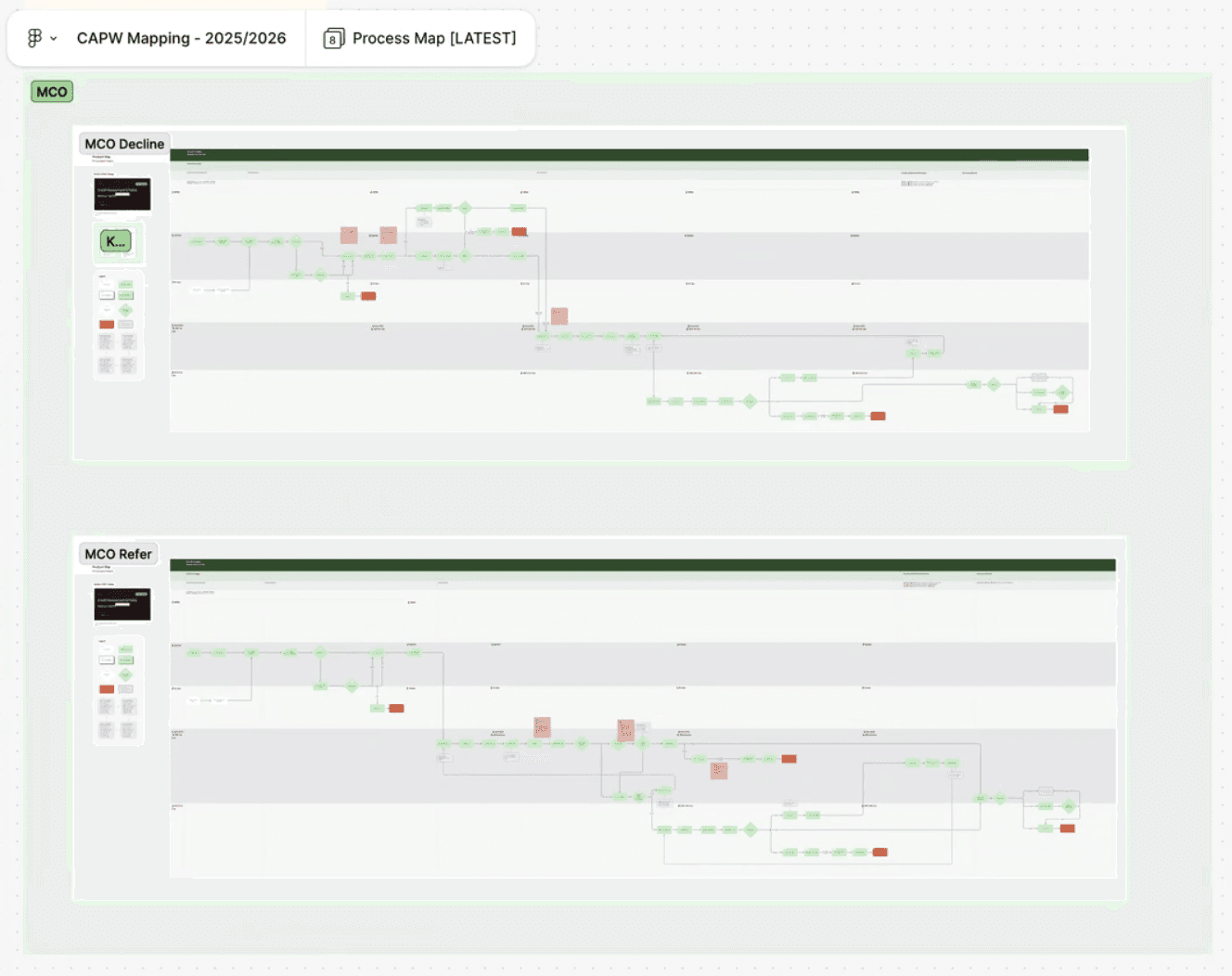
I hosted cross-functional workshops to build shared process maps for each product, then used them as the alignment artifact when negotiating scope with the wider stakeholder group. The maps made trade-offs debatable in the same picture, so disagreements are surfaced early.
3. Tech constraints
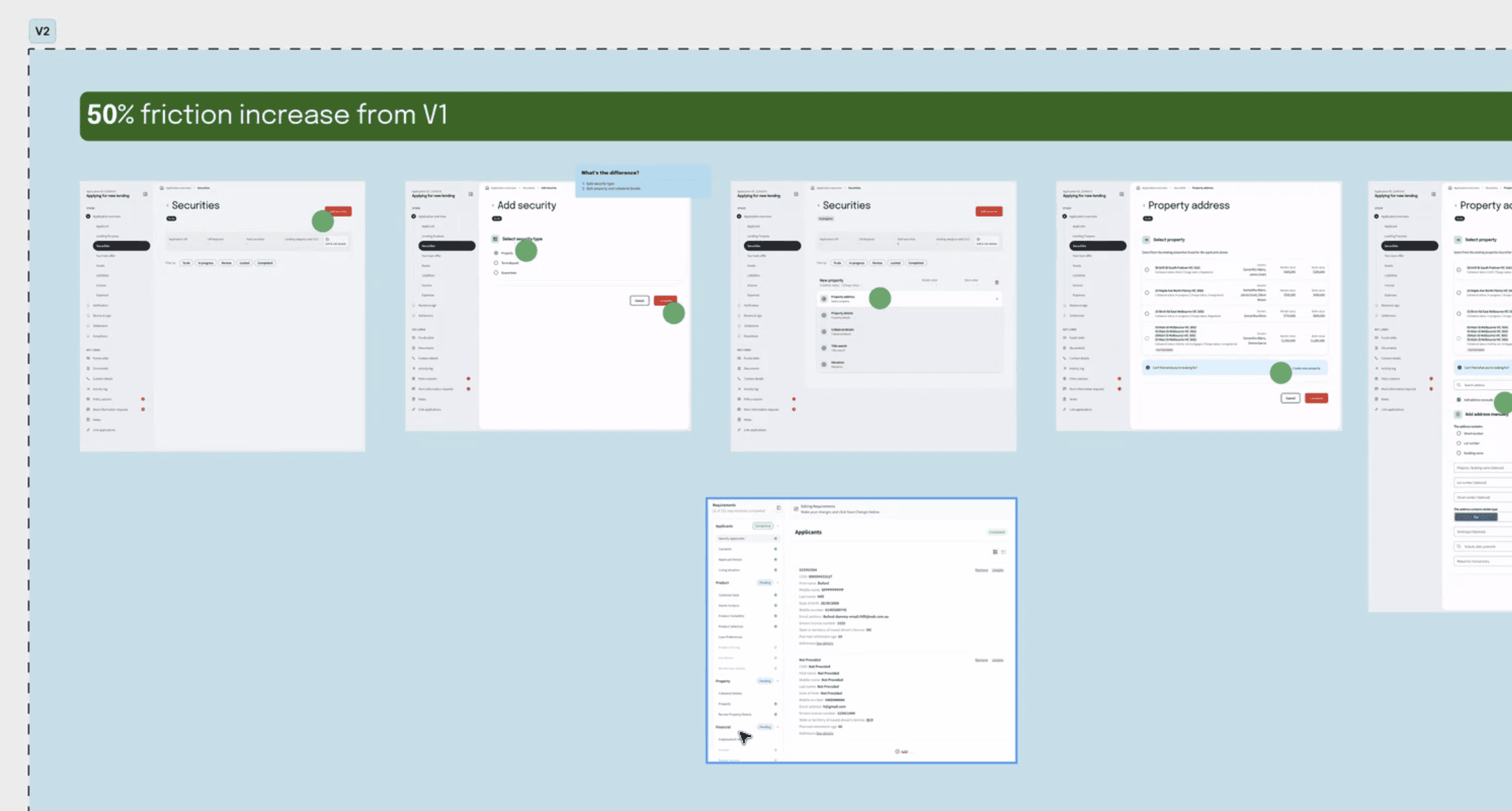
Work with hard constraints from the Smart Requirements Engine (SRE) - an off-the-shelf platform where developers couldn't build freely, new capability required escalation and time.
When an ideal pattern wasn't feasible within SRE, I framed the gap explicitly. I also aligned with designers facing the same SRE limits — shared problems get more leverage than individual ones. The call then got made jointly with product and tech, rather than imposed on design.
The outcome 🎉
Proven:
Process maps adopted as the cross-functional source of truth, owned by designers
All cross-product dependencies surfaced and resolved before build
SRE trade-offs negotiated jointly and early (previously inherited as fixed constraints)
Evidence the target is reachable: The previous platform dropped application time from 4 days to 1.8, for the 25% of applications it could handle.
Target:
100% of applications eligible for the new platform (vs. 25% on the previous build)
<10 minutes application time
1 hour to unconditional approval
50% cost reduction per application
The reflection
The thing I find in enterprise environment: the design problem is rarely the design problem. It's that no one has the same picture of the product they're building. Process maps and live walkthroughs are how I solve that — not as design artifacts, but as alignment tools. Producing the map is straightforward. Getting product, tech, and business to commit to the same version of it is the real work.